
/ Online Vocal Remover Editorial
Backing track for cover practice
Use a vocal remover for cover practice: learn the song, train without the original singer, record yourself, and build a performance that feels personal.
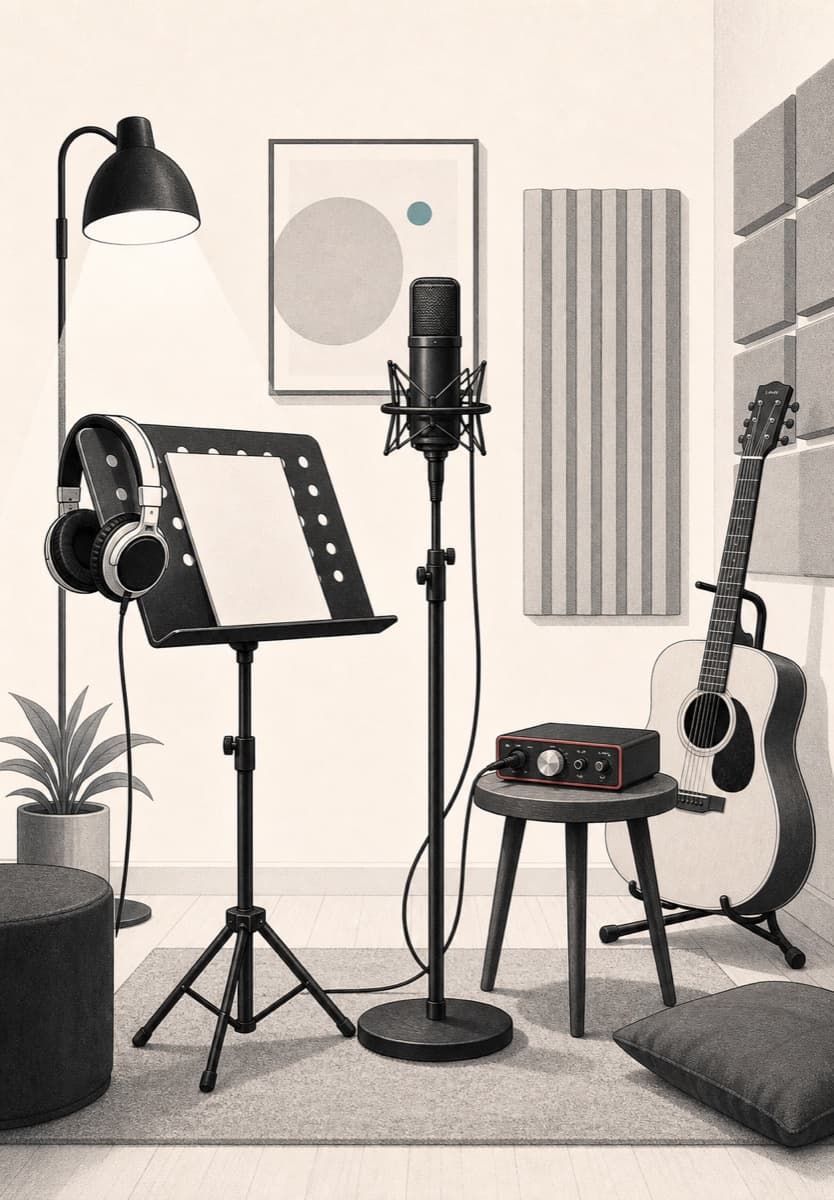
Removing the original vocal turns a song into an honest practice tool: nothing to hide behind. This guide walks a singer from learning the song, through daily technique and recorded self-review, to making the cover an interpretation rather than an imitation.
- With the guide vocal gone, an instrumental exposes exactly where your pitch, timing, and breath actually stand.
- Learn the song's phrasing and breath points before you try to reinterpret it.
- Recording yourself is non-negotiable — you do not hear your own voice the way listeners do.
- The goal of a cover is your interpretation, not a note-for-note copy of the original.
For a nearby workflow, continue with Vocal remover for karaoke tracks before you choose a final download.
Why an instrumental changes how you practice
Most people practice a cover by singing along with the original recording, and that is exactly why they plateau. The original vocal is a crutch: it carries the pitch, pulls you into each phrase, and quietly covers your mistakes. You come away feeling like you nailed it, when really you were riding along behind someone else. Strip that vocal out with a remover and the song becomes an honest mirror — suddenly the melody is yours to carry alone, and every weak spot has nowhere to hide.
That exposure is the whole point, and it is uncomfortable at first. The first few times you sing over a bare instrumental it feels empty, even a little exposed, because nothing is leading you into the lines anymore. Stay with it. Within a few passes you start to hear precisely where you rush the beat, where your breath runs out, and where a note drifts flat. Hearing the problem is ninety percent of fixing it, and a clean instrumental is what makes the problem audible.
Learn the song before you try to make it yours
Before you can reinterpret a song you have to understand it, and that means studying the original with intent rather than just enjoying it. Map the melody, sit with the lyrics and the story underneath them, and mark the phrasing — where the original singer breathes, where they hold back, where they push. These are not decorative details; they are the architecture of the performance, and knowing them is what lets you later decide which to keep and which to change on purpose.
Pay special attention to breath. Go through the song and mark every place the original singer grabs air, then find where you will need to breathe, which is not always the same place. The ability to snatch a quick breath in a tight gap between phrases is a real skill, and planning those moments in advance is the difference between a verse that flows and one that runs out of runway. Do this mapping once, carefully, and every later run-through gets easier.
- Study the melody, lyrics, and emotional intent before singing along.
- Mark the original's phrasing and every breath point.
- Plan your own breaths — they will not always match the original's.
The daily reps: warm up, breath, pitch
Progress comes from small, consistent sessions, not occasional marathons. Start every one with five minutes of real warm-up before a single lyric — going straight into a song cold starts you tense in the chest, throat, and jaw, and the high notes will make you pay for it. Then work breath support directly: a simple 4-4-4 pattern (inhale four counts, hold four, exhale four) builds the control that lets you sustain long notes and get through fast phrases without gasping. Breath is the engine under everything else.
For pitch, train it deliberately instead of hoping it improves. Play a note on a piano or a pitch app and match it with your voice; then sing a short phrase from the song and check yourself against the original note by note. When a passage keeps defeating you, isolate the hardest few bars, loop them, and sing them slowly — at sixty to seventy percent of tempo if your player can slow the instrumental down — five to eight times until pitch, breath, and tone settle together. Then bring it back up to speed.
- Warm up five minutes before the backing track starts.
- Build breath support with a 4-4-4 pattern and quick-breath drills.
- Match pitch against a reference, then loop hard bars slowly before speeding up.
Record yourself — the mirror you cannot argue with
Here is the uncomfortable truth that separates singers who improve from singers who stall: you do not hear your own voice the way anyone else does. Bone conduction flatters you in the moment, so the only reliable feedback is a recording. You do not need a studio — the condenser microphone in a modern phone captures enough nuance to reveal pitch drift, thin breath support, and sloppy timing. Record a full take over your instrumental, then listen back as critically as you would to a stranger.
Turn that into a system. Score each take against the specific things worth tracking — pitch accuracy, tonal steadiness, timing, breath, and dynamic range — even loosely on a one-to-ten scale, and keep the recordings. Because there is no original vocal bleeding into the track, what you hear is purely you, which makes week-over-week comparison brutally honest and genuinely motivating. The take you cringe at today becomes the baseline you have clearly beaten a month from now.
- Use your phone's mic — it is good enough to expose real problems.
- Listen for pitch drift, breath support, and timing specifically.
- Score takes loosely and compare across weeks, not days.
Making the cover yours, not a copy
Once the song sits comfortably in your voice, the real work begins: turning an imitation into an interpretation. Audiences can sense a note-for-note copy, and it rarely moves them the way a sincere reinterpretation does. The levers are yours to pull — dynamics and phrasing (add a softer moment, build to a bigger climax than the original dared), your own vocal tone instead of an impression of the artist's, and even arrangement, turning a driving pop song into a stripped acoustic reading or the reverse. Tina Turner did not politely reproduce "Proud Mary"; she rebuilt it, and that is why it became hers.
A bare instrumental is what gives you room to do this. With the original singer removed, there is no reference performance pinning you to their choices in real time — the space that used to be filled by their voice is now yours to shape. Start from what the song makes you feel, let that guide where you pull back and where you open up, and lean into the tone that is distinctly yours rather than sanding it off to match someone else.
Taking it public: from bedroom to upload
When a cover is ready to share, record a final take you are proud of and check it the way you would a performance — on real speakers, at real volume, all the way through. Private practice has no gatekeepers, but the moment a cover goes public the rules change. A recorded cover you release generally needs a mechanical license for the underlying song, and video platforms run their own music-matching systems that decide whether your upload stays up, gets monetized for the rights holder, or comes down.
None of that should scare you off — millions of covers live happily online — but it does deserve a deliberate last step rather than a blind upload. Confirm what your specific release requires and let the rights check be the final box before you publish. The fuller breakdown of licensing and platform matching lives in our guide to removing vocals from a song; here, just remember that practice is free and private, while publishing carries obligations worth handling on purpose.
Practice your next cover the honest way
Remove the original vocal, sing the song alone, and record yourself until the cover truly sounds like you.
Try the free online vocal remover
Related guides
Continue with the guides that connect most directly to this workflow.
Vocal remover for karaoke tracks
Everything between picking the right song and nailing the performance: which tracks separate cleanly, how to fit the key to your range, a rehearsal routine vocal coaches actually use, and what to do when the instrumental has flaws.
Instrumentals / 13 min readHow to make an instrumental track
Making an instrumental means different things for a cover, a video bed, a lesson, or a remix. This guide maps each goal to a method — from two-track separation to full stems, loudness for video, DAW prep, and the EQ moves that clean up what is left.